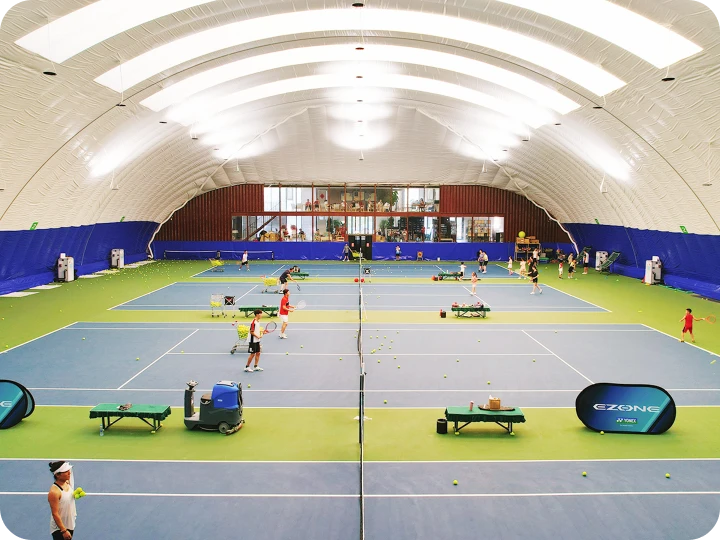
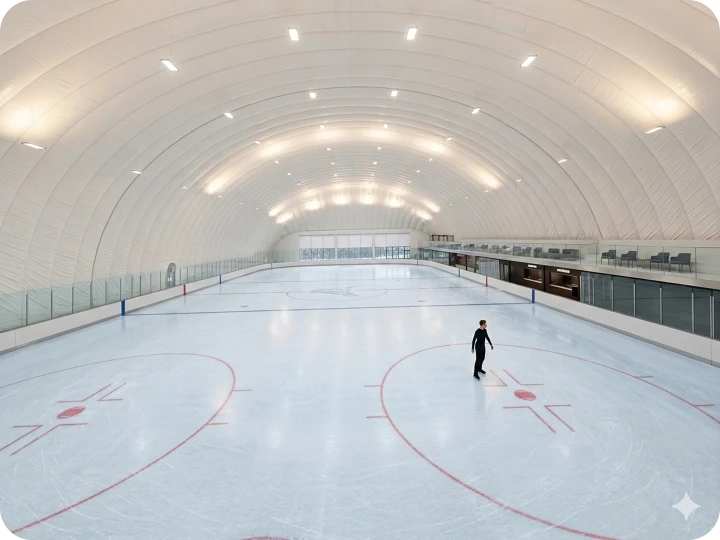
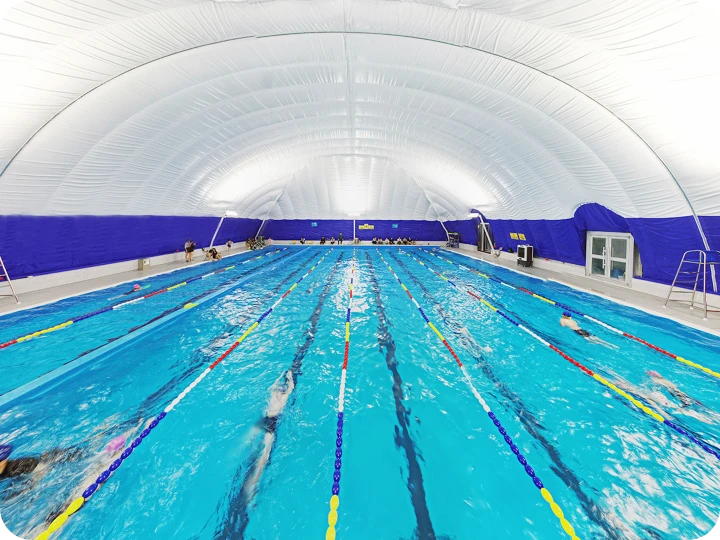
Ski Resort Air Dome
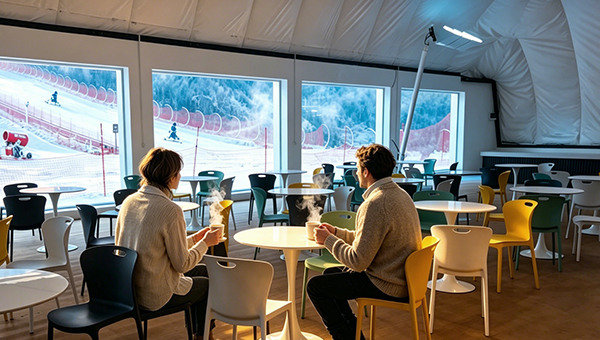
A ski resort air dome provides an enclosed reception hall at the base of the slopes. Internal air pressure holds the membrane roof in shape, leaving an open floor for ticket counters, equipment rental, changing areas and guest seating. Insulation and heating help guests warm up, get ready and take a break between runs.
— 360° View
Rotate, zoom, and explore the GS Sports Air Dome in 3D.
A busy reception hall has to handle snow outside, wet equipment inside and a steady flow of visitors. Site-specific snow-load design, an insulated enclosure and controlled roof-level exhaust help keep the space comfortable throughout the day. The layout gives guests room to collect their passes, change their boots and meet before heading onto the slopes.
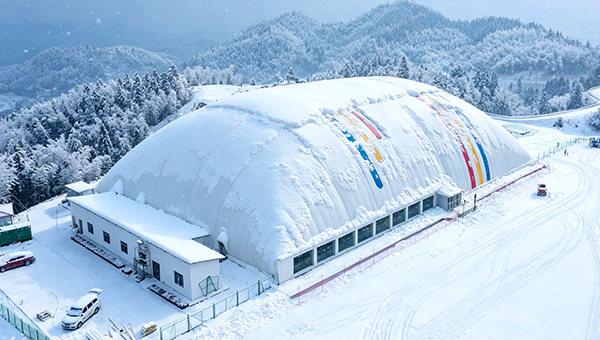
Snow conditions vary with altitude, wind and local weather. GS publishes a snow-load capacity of up to 1.5 kN/m², equivalent to approximately 153 kg of weight per square metre, for its cold-climate air dome offering. Each ski resort needs a design checked against local requirements, including uneven snow accumulation. Membrane geometry, anchoring, pressure control and winter operating procedures all contribute to snow performance. This rating describes load, not a fixed depth of snow.
Guests arrive with cold hands and snow-covered boots. The reception hall gives them somewhere to recover before going back outside. In its published Mongolia project account, GS reports approximately 10°C indoors when outdoor temperatures reached −40°C, a difference of around 50°C. That result came from the enclosure working with heating and ventilation. For a ski reception hall, insulation and heating capacity are selected around the agreed indoor temperature, visitor numbers and frequency of door use.
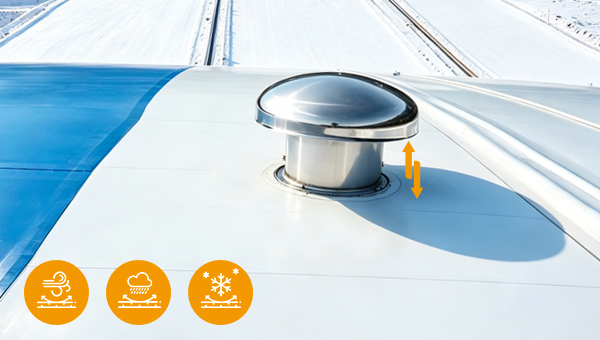
Roof-mounted stainless steel exhaust valves provide a controlled outlet for indoor air. Paired with fresh-air supply, they help remove moisture brought in by wet clothing and melting snow. Exhaust flow must remain coordinated with the inflation system: one manufacturer publishes an operating pressure range of 300–500 Pa for its permanent domes, illustrating the small pressure difference these buildings manage. The GS project design determines the actual pressure setting, valve size and airflow, with attention to condensation and winter icing.
1. How much does an inflatable dome cost?
Size, snow-load requirements, insulation and equipment all affect the price. As a published market reference, an air dome structures is US$11–25 per square foot, approximately US$118–269 per square metre. This is a supplier-specific structure price, not a GS quotation or a completed ski reception hall budget. Send us your location, planned dimensions and room requirements for a project-specific quote.
2. How long do air domes last?
- Published manufacturer estimates commonly fall around 20–30 years, depending on the membrane and operating conditions. Farley gives an air dome lifespan of 20–25 years, while Covair states 20–30 years for properly maintained PVC membranes. Regular inspections and timely repairs help preserve the enclosure. Fans, heating equipment and controls follow separate maintenance and replacement schedules; the membrane service life and warranty should appear separately in your quotation.
3. How much does it cost to build an air dome?
- The finished project costs more than the dome package. Your budget also needs to cover foundations and anchoring, site preparation, heating, electrical connections, backup power, delivery, installation and the reception hall fit-out. For scale, HeroX publishes US$150,000–350,000 for a standard 6,000–10,000 sq ft tennis dome, including membrane, HVAC, engineering and delivery. A ski resort reception hall requires its own estimate because mountain access, winter design conditions and interior facilities change the scope.
4. How do inflatable domes stay up?
- Blowers continuously maintain air pressure slightly above the pressure outside. This pressure keeps the membrane tensioned, while perimeter anchors secure it to the foundation. Airlock entrances limit pressure loss as visitors enter and leave. The design also needs standby inflation capacity and backup power to maintain support during equipment or mains-power interruptions.
5. How does an air dome work?
- The inflation system maintains the roof shape, while heating and ventilation manage indoor conditions. Sensors and controls regulate the equipment as conditions change. In a ski reception hall, the design must account for busy entrances, wet clothing and changing occupancy. Fresh-air supply and controlled exhaust manage air exchange, while insulation reduces heat loss through the enclosure.