Ice Hockey Air Dome
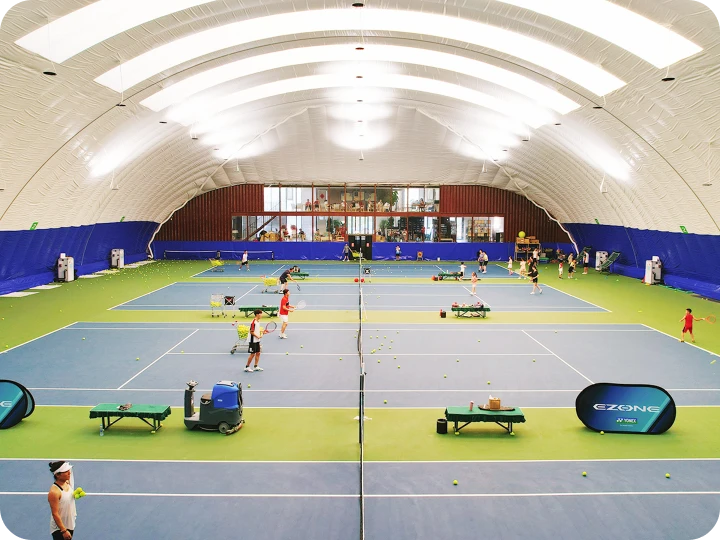
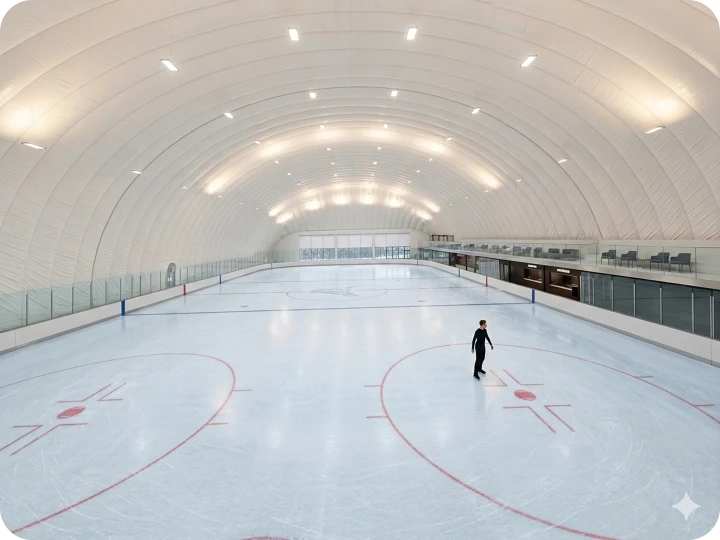
An ice hockey air dome covers a rink with a fabric roof held up by continuous internal air pressure. The column-free space accommodates skating, hockey practice and games. Ice refrigeration, insulation and humidity control work alongside the enclosure to keep the rink operating throughout the year.
— 360° View
Rotate, zoom, and explore the GS Sports Air Dome in 3D.
Good ice conditions start with more than refrigeration. An insulated membrane helps limit heat transfer, while carefully detailed seams reduce thermal bridging and air leakage. Temperature and humidity control work together to maintain the rink environment and reduce condensation above the ice.
Temperature and ice conditions
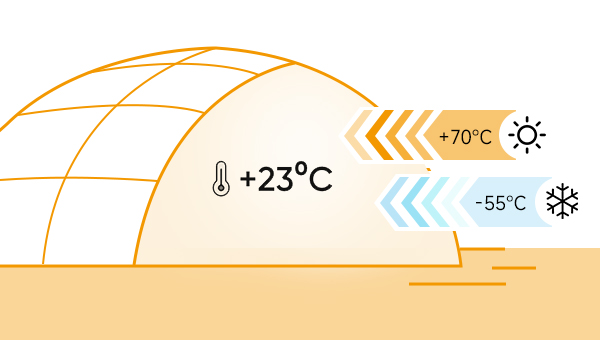
Hockey ice needs a different temperature from the air above it. One reference operating condition pairs indoor air at around 7°C with ice at −6.7°C to −5.6°C and a thickness of about 32 mm. Refrigeration maintains the ice; the indoor climate system manages the air. Actual settings depend on rink use and local weather.
Membrane and insulation
The outer membrane has a PVDF finish for weather protection. Inside, a liner and insulation layer limit heat transfer through the enclosure, helping reduce heating and cooling demand. Membrane specifications and insulation thickness depend on the climate and whether the rink runs seasonally or all year.
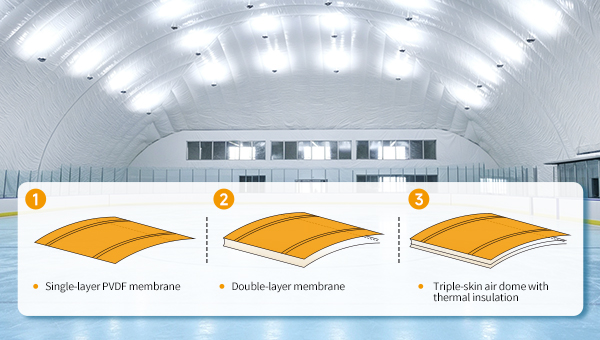
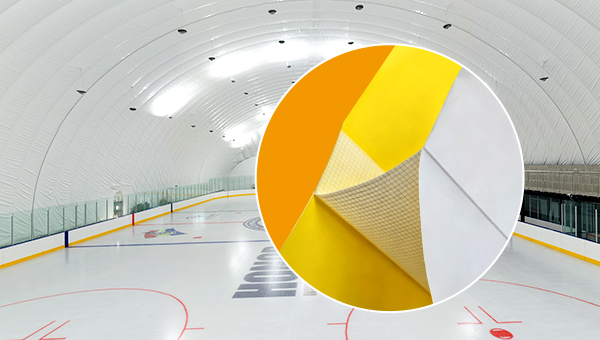
Seams, entrances and perimeter connections deserve close attention: gaps and direct connections between layers can allow air leakage and create thermal bridges. Insulated connections reduce heat transfer at these points. Dehumidification handles moisture in the air, while an optional low-emissivity liner reduces radiant heat transfer to the ice. Together, these measures help limit overhead condensation and dripping.
1.How much does an ice hockey air dome cost?
- Published supplier estimates put general air-supported building systems at US$10–25 per square foot, compared with US$80–160 for a conventional pre-engineered steel sports building shell. These figures provide an early budget reference, but cover different specifications.
- An ice hockey facility also needs ice refrigeration, rink flooring, insulation and dehumidification. Compare quotes for the same floor area, climate conditions and equipment scope to establish the actual cost difference.
2.What is an ice hockey air dome?
- An ice hockey air dome encloses a rink beneath a fabric membrane held up by internal air pressure. Its open interior has no supporting columns, leaving room for the ice, player benches and spectator areas. The layout can accommodate hockey training, games and public skating.
3.How does an ice hockey air dome work?
Blowers maintain slightly higher air pressure inside the dome to hold the membrane in shape. Airlock entrances limit pressure loss as people enter and leave. A separate refrigeration system keeps the ice frozen, while ventilation and dehumidification manage the indoor air. Backup equipment helps maintain inflation during power interruptions.
4.How long does an ice hockey air dome last?
- Published manufacturer estimates place air dome service life at around 20–30 years, depending on the membrane and operating conditions. Farley lists 20–25 years, while Broadwell gives approximately 25–30 years for year-round domes. Actual life depends on weather exposure, installation and maintenance. Regular checks of seams, anchors and inflation equipment help prevent early deterioration. Blowers, refrigeration and dehumidification equipment follow separate maintenance and replacement schedules.
5.Can an ice hockey air dome operate year-round?
- Yes, with refrigeration and climate equipment sized for local summer conditions. Insulation limits heat transfer through the enclosure, and dehumidification helps control fog and overhead dripping. In hot, humid regions, the design must also account for moisture entering through doors and the fresh-air supply.